



Use this checklist to prepare for your practical driving test. Here you’ll find what documents to bring, the technical checks you must know, and tips for safe driving during the test.
Indholdsfortegnelse
1. Documents you must bring
- Application form (P23)
- Signed and stamped lesson plan from your instructor
- Passport (and possibly birth certificate)
- Residence permit, previous driving license or ATN course certificate (if applicable)
2. Safety checks – engine compartment
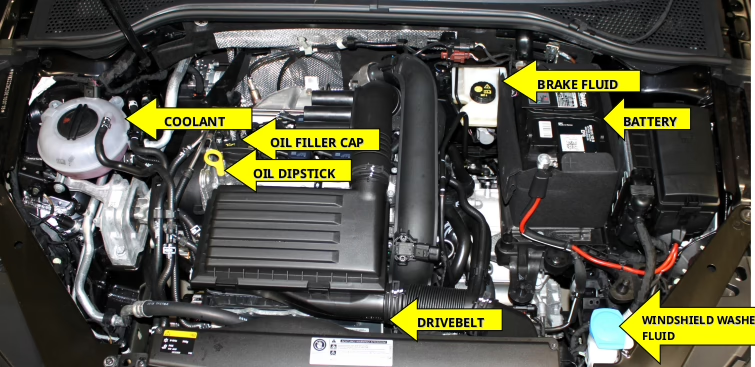
You must know and be able to check:
- Brake fluid: between min. and max.
- Coolant: between min. and max.
- Washer fluid: sufficient for the next drive
- Engine oil: between min. and max. (check when cold and on level ground)
- Power steering fluid: between min. and max. (electric servo is checked via dashboard icon)
3. Tires and suspension
- All tires must be the same size and type (except spare).
- Correct tire pressure (per manufacturer’s instructions).
- Minimum tread depth: 1.6 mm (checked with tread wear indicators).
- Tires and rims must be free from cracks, bulges, holes or damage.
- Shock absorbers: car must settle immediately after being pressed down.
Husk: Manglende kendskab til love og regler kan aldrig bruges som undskyldning for fejl i trafikken.
4. Lights, reflectors and horn
- You must check all lights, including:
- Position lights (visible 300 m, no dazzling).
- Low beam (2 pcs., 30 m range, asymmetrical, must not dazzle).
- High beam (2 pcs., 100 m range, blue dashboard lamp when on).
- Rear lights (red, visible 300 m).
- Brake lights (3 pcs., brighter than rear lights).
- License plate light (white, visible 20 m).
- Indicators (6 pcs., flashing 1–2 times/second).
- Hazard lights (all indicators flashing simultaneously).
- Reflectors (2 red at rear, not triangular).
- Horn (clear, constant tone).
5. Steering
- Must be easy, safe, fast, and precise.
- No play: wheels must follow steering wheel immediately.
- Power steering: check fluid level and functionality with engine running.
6. Brakes
The car has dual-circuit braking and ABS. You must check:
- ABS lamp turns off after starting.
- Brake pedal: rough surface, firm, doesn’t sink.
- Brake booster: pedal sinks slightly when engine starts.
- Brake fluid: between min. and max.
Parking brake must hold the car on a slope.
7. Exhaust system
- Must be tight (check with cloth on muffler).
- Noise should come from engine, not underneath the car.
- Exhaust pipe secured and free from leaks.
- Exhaust smoke: blue = oil, black = poor combustion, optimal = invisible.
8. Warning and indicator lights
You must know switches for:
- Wipers, washer fluid, fans, rear window heater
- High beam, indicators, hazard, position and low beam, horn
And warning lights for:
- Airbag, door lock, parking brake, ABS, oil pressure, temperature, electric current, brake system fault
9. Tips for the practical test
- Orientation: mirror – mirror – shoulder (always).
- Look ahead ~200 m to plan.
- Drive confidently and at correct speed (not too slow).
- Proper positioning on the road (often far right, but depends on situation).
- Keep safe distance from cars and cyclists.
- At intersections: orient – slow down – position – gear.
- Turning: orient thoroughly, position correctly, yield when required.
- Roundabouts: orient and signal before exit.
- Parking: drive slowly, orient, signal.
- Follow right-of-way rules.